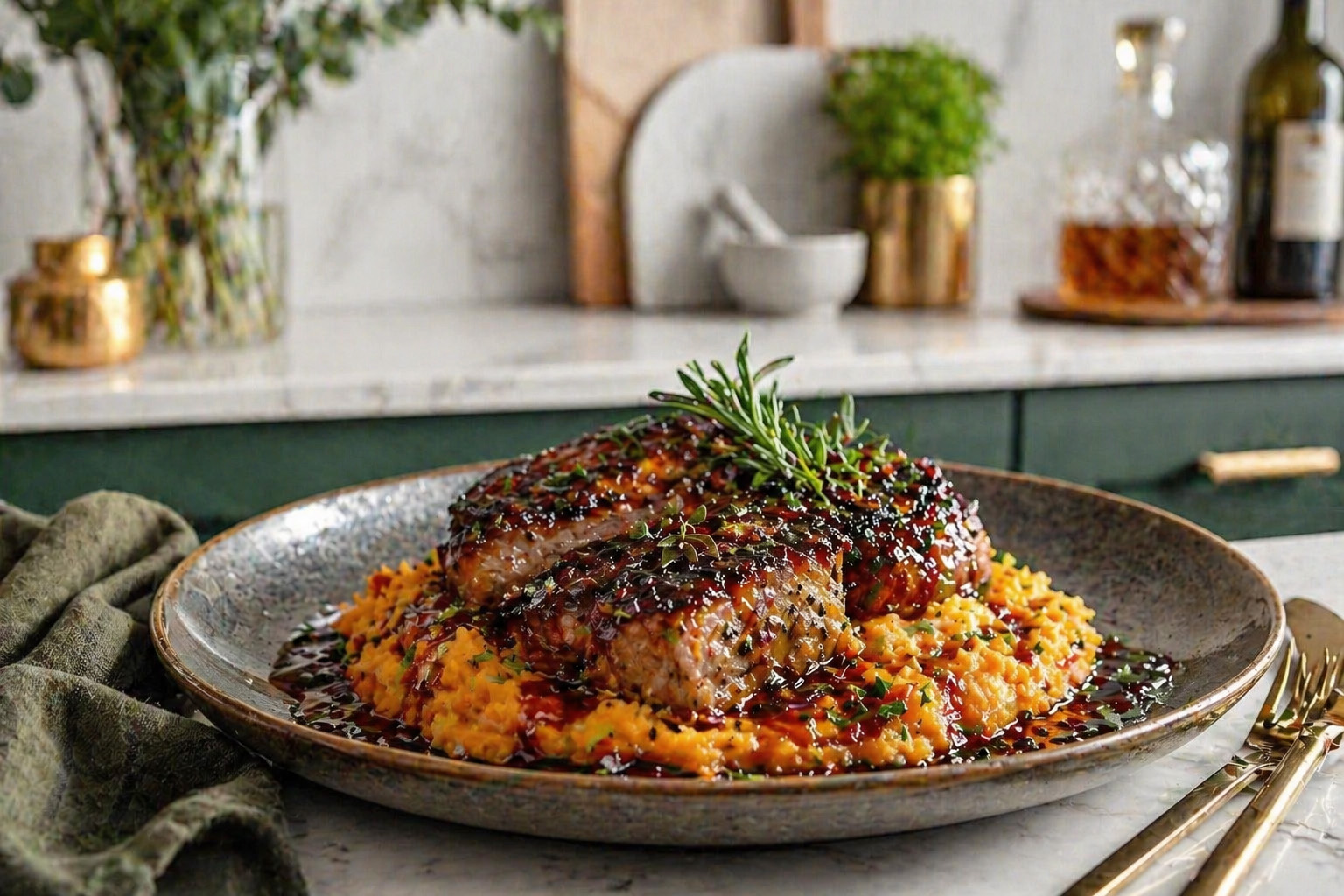
There are dishes that simply satisfy, and then there are those that seem to settle gently into the moment—unhurried, fragrant, and quietly indulgent. Cider-glazed pork belongs firmly to the latter. The sweetness of apple cider, warmed with soft spice, wraps itself around tender meat in a way that feels both comforting and considered. It’s less a recipe, more a small ritual—one that turns an ordinary evening into something worth lingering over.
Why Make It at Home?
To cook this dish yourself is to take ownership of every detail, from the first pour of cider to the final seasoning at the stove.
A Thoughtful Choice of Ingredients
There’s a certain pleasure in selecting well—choosing a good cut, a proper cider, fresh aromatics. Each element carries its weight, and together they create something far greater than the sum of their parts.
A Lighter, More Considered Approach
Homemade cooking allows for quiet refinement. Seasoning can be adjusted with care, sweetness kept natural, richness balanced. Nothing feels excessive; everything has its place.
An Exercise in Simplicity
There’s elegance in restraint. A dish like this doesn’t rely on complication, but on patience—letting flavours develop slowly, without rush or interference.
The Pleasure of the Process
Cooking, at its best, is a rhythm. The gentle simmer, the occasional stir, the soft scent of cider rising with the steam—it invites you to slow down, to be present, to enjoy the making as much as the meal itself.
Apple cider may feel rooted in cooler seasons, but its warmth translates beautifully year-round. A touch of acidity sharpens the sweetness, while its natural depth enhances the savoury notes of the pork with quiet confidence.
To Serve
A silken mash of sweet potatoes is a natural companion—soft, buttery, and just sweet enough to echo the cider without overpowering it. Together, they create a plate that feels balanced and complete, both visually and on the palate.
This is the kind of dish that doesn’t demand attention, yet earns it all the same. Simple, elegant, and deeply satisfying—food designed to be enjoyed slowly, and remembered long after the last bite.
Prepare
Cook Time
Serving
Ingredients for Cider-Glazed Pork
There’s a quiet confidence in a well-considered ingredient list—nothing excessive, nothing overlooked. Each element here is chosen not for complication, but for the way it contributes to a dish that feels both grounded and gently refined.
The Essentials
Pork
A well-marbled cut—shoulder or belly, perhaps—suited to slow cooking, where time does the work and tenderness is quietly earned.
Smoked Bacon
A subtle layer of savoury depth. It needn’t dominate, only lend a gentle richness that rounds the sweetness of the cider.
Apple Cider
The heart of the dish. Choose a fresh, unfiltered cider where possible—something with natural sweetness and a touch of sharpness to keep everything in balance.
Onions & Garlic
The quiet foundation. Softened slowly, they bring warmth and depth without ever asking for attention.
Fresh Herbs
Thyme or rosemary, used with a light hand. Enough to perfume the dish, never to overwhelm it.
A Touch of Acidity
A small splash of cider vinegar, added towards the end, to lift and refine the finish.
A Note on Variation
This is a dish that welcomes a little intuition. Root vegetables—carrots, perhaps, or sweet potatoes—can be folded in to create something more generous, more rustic. Or it can be kept simple and restrained, allowing the cider and pork to remain the focus.
However you choose to shape it, the intention remains the same: honest ingredients, thoughtfully combined, and given the time they deserve.
Preparing Cider-Glazed Pork
There is something deeply satisfying about a dish that comes together slowly—where each step feels deliberate, and the result is quietly impressive. Cider-glazed pork, served with a soft sweet potato mash, is exactly that kind of meal: comforting, elegant, and made to be savoured.
Marinate the Pork
Flavour begins here, with a marinade that balances sweetness, warmth, and gentle acidity.
You’ll need:
-
1 cup apple cider
-
2 tablespoons cider vinegar
-
2 tablespoons maple syrup
-
3 garlic cloves, finely minced
-
1 teaspoon ground cinnamon
-
Sea salt and freshly ground black pepper
Whisk everything together until combined. Place your pork into a shallow dish or sealed bag, pour over the marinade, and ensure it’s fully coated. Leave to rest in the refrigerator for at least an hour—longer, if time allows. The flavours will deepen, becoming more rounded and harmonious.
Prepare the Sweet Potato Mash
While the pork absorbs its marinade, turn your attention to something softer.
You’ll need:
-
2 large sweet potatoes
-
2 tablespoons butter
-
A pinch of sea salt
-
A light dusting of cinnamon (optional)
Peel and cut the sweet potatoes into even pieces, then simmer in salted water until tender—about 15–20 minutes. Drain well and set aside, ready to be transformed into something smooth and comforting.
Sear the Pork
Remove the pork from its marinade, allowing any excess to fall away. Heat a heavy pan over a medium flame with a touch of oil or butter.
Lay the pork into the pan and let it colour undisturbed for a few minutes on each side, until a deep, golden crust forms. This step is essential—it builds flavour, adding richness and depth to the finished dish.
Create the Sauce
Pour the reserved marinade into the same pan, letting it meet the caramelised edges left behind by the pork.
Bring it to a gentle simmer, stirring softly to lift those concentrated flavours from the base. Allow it to reduce for 5–7 minutes, until it thickens slightly into a glossy, fragrant sauce.
Finish the Mash
Return to the sweet potatoes while the pork rests.
Add the butter and begin to mash until smooth and velvety. Season lightly with salt, and if you wish, a whisper of cinnamon to echo the warmth of the dish.
To Serve
Slice the pork and arrange it alongside a generous spoonful of sweet potato mash. Spoon the warm cider sauce over the top, letting it settle naturally into the plate.
A scattering of fresh herbs—thyme or parsley—adds a final note of freshness.
This is a dish that doesn’t rush to impress, yet does so effortlessly. Soft sweetness, gentle spice, and savoury depth, all brought together with a quiet sense of balance—perfect for evenings that call for something just a little more considered.
Variations on Cider-Glazed Pork
There’s a quiet pleasure in allowing a dish to evolve—small, thoughtful changes that shift its character without losing its essence. Cider-glazed pork is wonderfully receptive to this kind of gentle experimentation, offering just enough structure to guide you, and just enough freedom to make it your own.
A Different Note of Herbs
Herbs have a way of reshaping a dish with the lightest touch—never overwhelming, but subtly guiding its direction.
Rosemary lends a deeper, almost woodland fragrance, pairing beautifully with the natural sweetness of the cider and adding a sense of warmth to the plate.
Sage brings something softer and more rounded—earthy, slightly savoury, and perfectly suited to slower, more contemplative cooking.
For a brighter finish, a scattering of flat-leaf parsley or even a hint of fresh coriander can lift the dish at the last moment, adding contrast and freshness.
The choice is less about right or wrong, and more about mood—each herb offering its own quiet interpretation.
Beyond the Sweet Potato
While a silken sweet potato mash feels like a natural companion, there’s elegance in variation—particularly when the balance of sweetness and savoury depth is preserved.
Butternut squash purée offers a similar softness, with a slightly more delicate sweetness that pairs effortlessly with the cider glaze.
Carrot purée brings both colour and subtle brightness, its natural sugars echoing the cider while adding a gentle lift.
Mashed cauliflower, lighter and more restrained, allows the pork to take centre stage while still providing a creamy, comforting base.
For something a little different, buttered grains—such as softly seasoned quinoa or pearl barley—introduce texture and a quiet nuttiness that complements the dish beautifully.
At its heart, this is a dish that welcomes intuition. A change of herb, a different accompaniment—each decision shapes the experience in small but meaningful ways. And often, it’s in those subtle variations that something new, and unexpectedly wonderful, is found.
Notes & Quiet Considerations
The beauty of cider-glazed pork lies in its restraint. With a few thoughtful choices and a little patience, the dish finds its balance almost effortlessly—each element given just enough space to speak.
Choose Well, Cook Simply
The Cut Matters
Look for pork with good marbling—shoulder or a well-trimmed belly are ideal. It’s this gentle layering of fat that yields tenderness and depth as it cooks, transforming slowly into something rich yet balanced.
A Proper Cider
Whenever possible, choose a fresh, unfiltered apple cider. It should carry a natural sweetness, softened by a slight sharpness—never cloying, always bright. This is where much of the dish finds its character.
A Gentle Hand with Spice
Warm spices should feel like a suggestion, not a statement. A light touch of cinnamon, perhaps a whisper of nutmeg, is enough to echo the cider’s warmth without overwhelming it. The aim is harmony, not intensity.
Time as an Ingredient
This is a dish that rewards patience. A slower cook allows the flavours to settle and deepen, the pork becoming tender in a way that cannot be hurried. If time is short, a higher heat will suffice—but given the choice, let it take its time.
Balance on the Plate
A soft, buttery mash—sweet potato or otherwise—provides a natural counterpoint. Its gentle sweetness mirrors the cider, while its texture offers comfort and contrast. Nothing competes; everything aligns.
In the end, it’s the simplicity that defines it. Good ingredients, treated with care, allowed to come together without fuss. The result is not just a dish, but something quietly memorable—warm, balanced, and effortlessly refined.

Print & Share
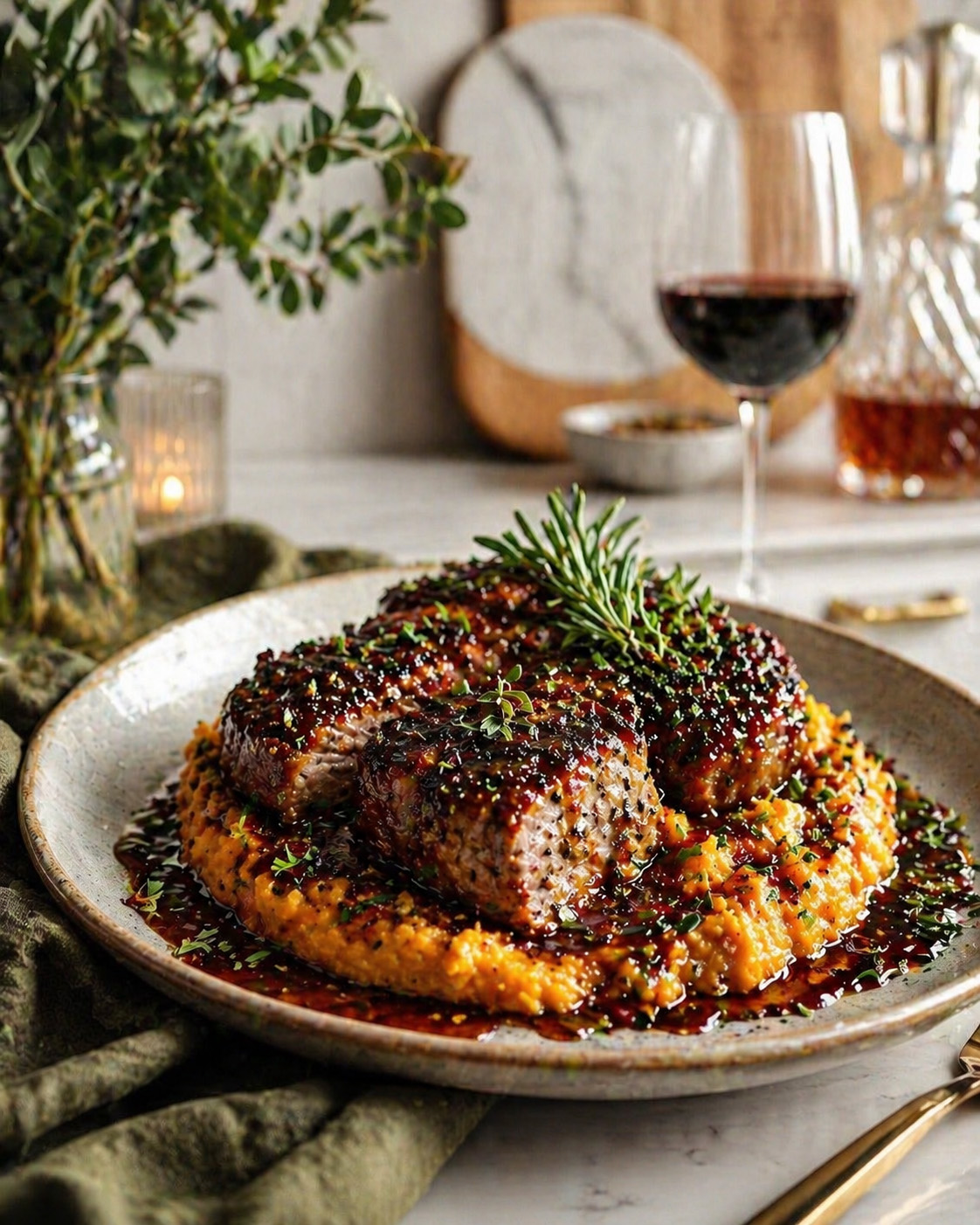
Orchard Cider Pork with Velvet Sweet Potato Purée
Ingredients
Method
-
Preheat the oven to 190°C (375°F), allowing it to come fully to temperature while you prepare the pork.
-
Season the tenderloin with sea salt, black pepper, cinnamon, and nutmeg, ensuring an even, delicate coating. Heat the olive oil in a heavy pan over a medium heat, then sear the pork on all sides until it develops a deep, golden colour—this is where the flavour begins to build.
-
Transfer the pork to a baking dish and pour over the apple cider. Roast for 25–30 minutes, or until the centre reaches 63°C (145°F), the cider gently reducing around it as it cooks.
-
While the pork roasts, peel and cut the sweet potatoes into even pieces. Simmer in lightly salted water until completely tender, then drain well. Mash with the cream, butter, and maple syrup until smooth and velvety, adjusting the texture to your liking.
-
Once cooked, remove the pork from the oven and allow it to rest briefly—just enough for the juices to settle. Slice carefully, then arrange over a generous spoonful of the sweet potato mash. Finish with a light spooning of the warm cider juices from the dish.
-
Simple, composed, and quietly indulgent—best served without rush.
Notes
And while sweet potato offers a natural pairing, other roots work beautifully in its place. Parsnip, carrot, or even a blend of both can be softened and mashed to create something equally comforting, each bringing its own quiet character to the plate.
Discover more from Hartwell Kitchen with Flora Ashbury
Subscribe to get the latest posts sent to your email.