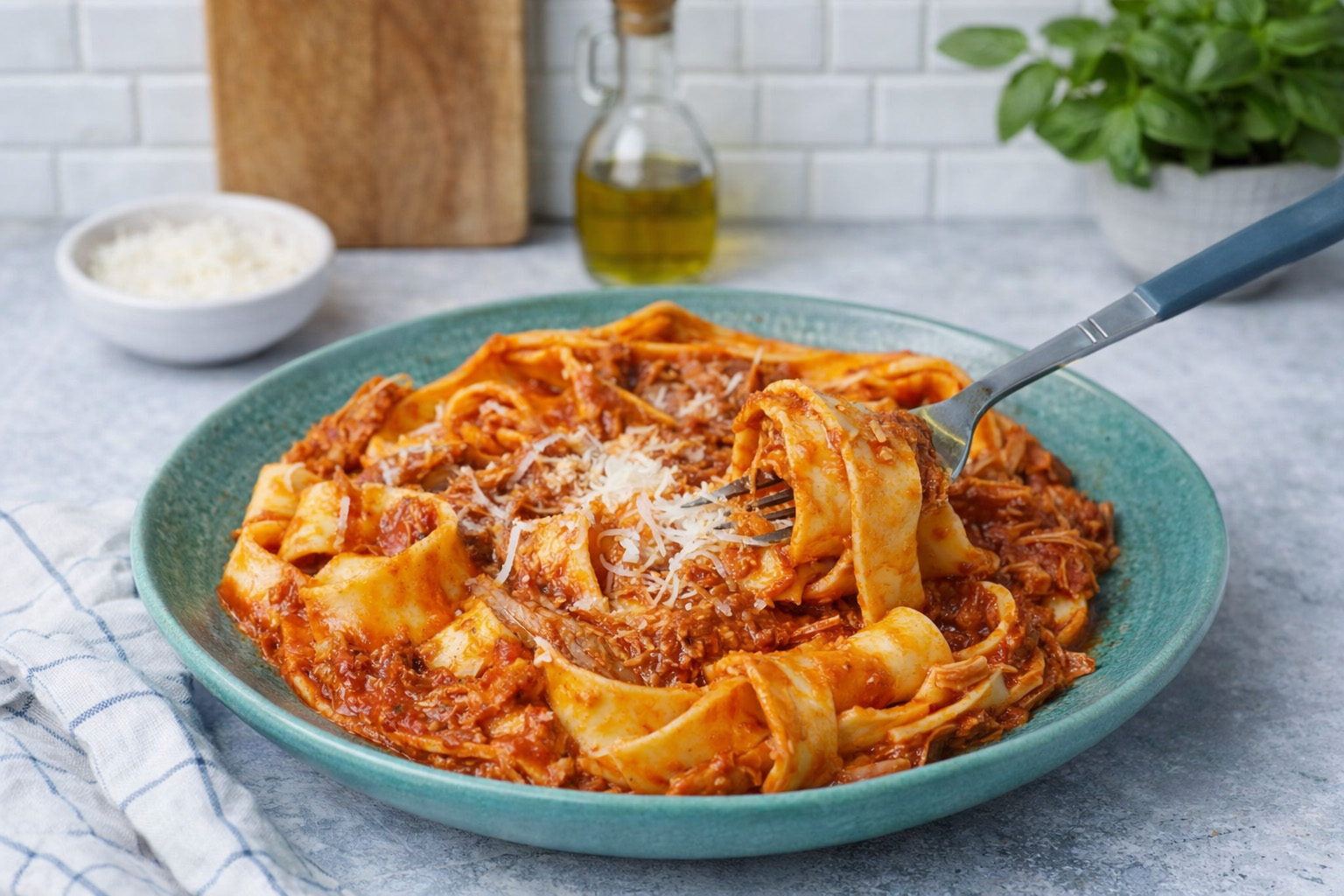
Duck ragù is something altogether deeper and more quietly indulgent than its better-known counterparts. Here, duck legs are given time—slowly braised until the meat yields effortlessly, then folded back into a rich, gently simmered sauce layered with tomato, wine, and soft aromatics. The result is full-bodied and comforting, with a subtle game richness that feels both rustic and refined.
In the hills of Tuscany, this dish takes its most familiar form as pappardelle all’anatra—wide ribbons of pasta dressed in a deeply savoury ragù, finished simply with a scattering of Parmesan. Further north, in Venice, it shifts in character: often prepared without tomatoes, enriched instead with finely minced duck and sometimes livers, creating a lighter, more delicate sauce. There, it’s just as likely to be paired with gnocchi or thick strands of bigoli.
However it’s made, duck ragù is a dish that rewards patience—best enjoyed slowly, perhaps at the end of a long day, with a glass of something red and the sense that nothing has been hurried.
Prepare
Cook Time
Serving
Ingredients
For this ragù, the ingredients are simple, but each plays its part with quiet purpose. Duck legs are the natural choice—their richness and bone lend depth and body as they slowly cook down, creating a sauce that feels full and complete. A classic soffritto of onion, carrot, and celery forms the base, softened gently until sweet and fragrant, while fresh rosemary brings a clean, resinous note that lifts the whole.
Garlic adds warmth, and a small handful of dried mushrooms—if you have them—deepens the flavour beautifully, adding an almost woodland richness. A splash of dry wine, white or red, introduces a subtle acidity and balance; white keeps things lighter and allows the duck to remain at the forefront, though either works well. Good stock is essential—chicken will do, but a homemade duck broth, if you happen to have one, transforms the sauce into something truly exceptional. Finally, tomato passata brings everything together—smooth, naturally sweet, and already refined—allowing the ragù to settle into a rich, cohesive whole without heaviness.
Method
Slow, steady, and quietly attentive
-
Prepare the duck
Begin by trimming away any excess fat from the duck legs—this ensures the sauce remains rich, not heavy. Season well on both sides with sea salt and freshly ground black pepper. -
Brown the meat
Warm a little olive oil in a large, heavy-based pot over a medium heat. Once hot, add the duck legs and colour them deeply on both sides until golden. Lift them out and set aside. -
Prepare the base
Finely chop the onion, carrot, celery, rosemary, prosciutto, and garlic—keeping everything small and even so it melts gently into the sauce. -
Build flavour
Add the prosciutto to the pot and cook briefly until lightly golden. Stir in the onion, carrot, celery, and rosemary, allowing them to soften slowly and release their sweetness. Add the garlic and dried mushrooms, cooking just until fragrant. -
Deglaze
Pour in the wine and let it reduce gently, leaving behind depth and balance rather than sharpness. -
Form the sauce
Add the stock and tomato passata, stirring everything into a smooth, cohesive base. -
Slowly braise
Return the duck legs to the pot, nestling them into the sauce so they are fully submerged. Let the ragù simmer very gently, uncovered, for 2 to 2½ hours. Turn the legs once during cooking—the meat should become tender enough to fall easily from the bone. -
Shred and finish
Lift the duck from the pot, shred the meat using two forks, and discard the bones and skin. Return the meat to the sauce and stir through until warmed. -
Serve
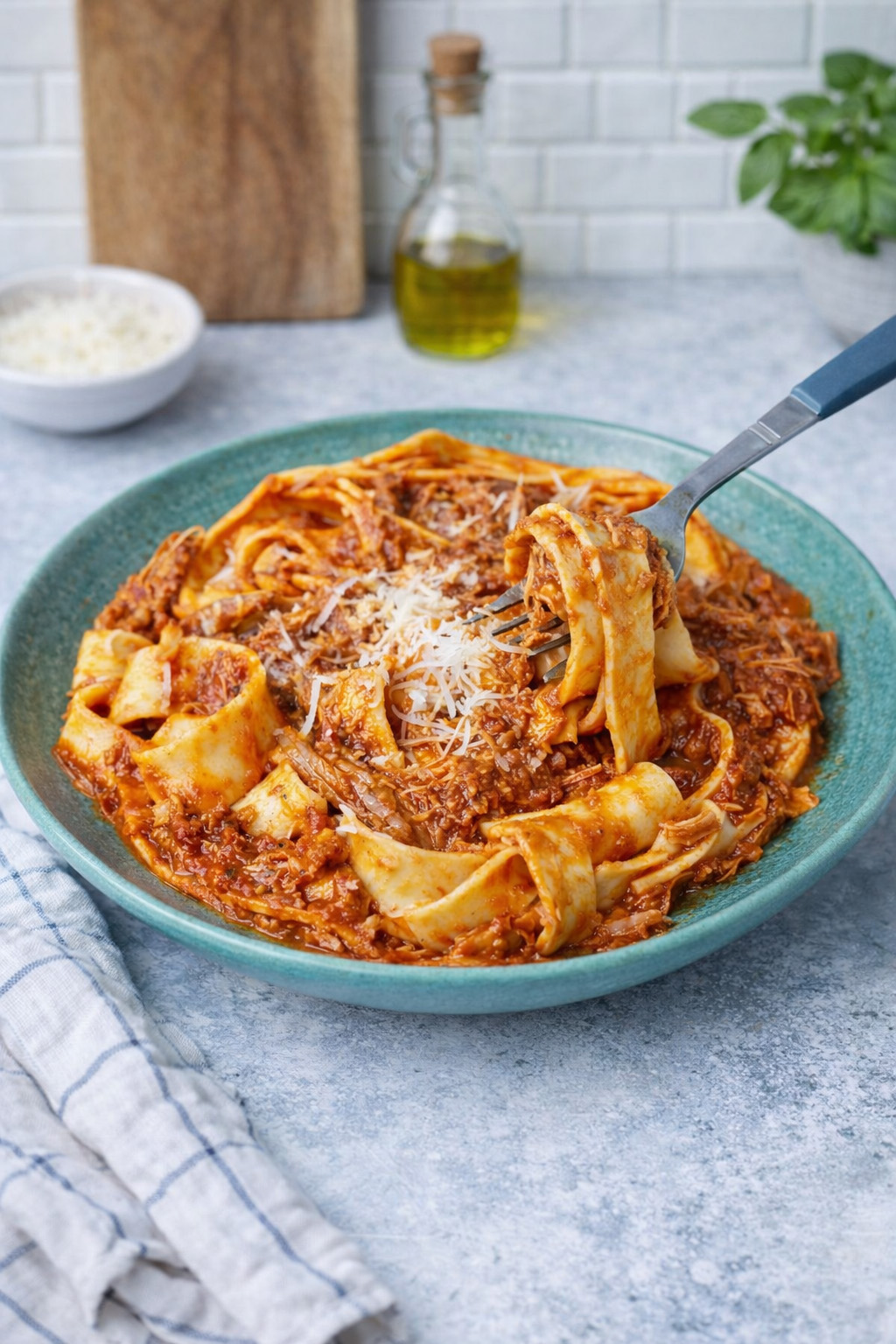
Taste and adjust the seasoning, then spoon generously over pappardelle and finish with a fine grating of Parmesan.
Serve slowly, while the sauce is still warm and the table is waiting.
Serving
Simple, generous, and unfussy
This ragù is at its best when folded through wide ribbons of pappardelle or tagliatelle, where the sauce can cling to every curve. Penne works just as well for something a little more everyday, while soft potato gnocchi or a spooned bed of creamy polenta offer a gentler, more comforting alternative.
Keeping
Made to be enjoyed again
Store the ragù and pasta separately to keep everything at its best. The sauce will keep well in the fridge for up to 3–4 days, and freezes beautifully for several months—ready for an easy, deeply satisfying meal when needed.
If you prefer a lighter finish, allow the sauce to cool completely, then chill it. Any excess fat will rise to the surface and can be easily lifted away before reheating, leaving the flavour intact but the texture a little more refined.

Print & Share

Farmhouse Duck Ragù with Gentle Herbs
Ingredients
Method
-
Begin by preparing the base: finely chop the onion, carrot, celery, rosemary, prosciutto, and garlic, keeping everything small and even so it melts gently into the sauce. Trim any excess fat from the duck legs, then season them well with salt and pepper.
-
Warm the olive oil in a large, heavy-based pot over a medium heat. Add the duck legs and brown them deeply on both sides until golden, then lift them out and set aside.
-
In the same pot, add the prosciutto and cook briefly until lightly coloured. Stir in the chopped onion, carrot, celery, and rosemary, allowing them to soften and sweeten for a few minutes. Add the garlic and dried mushrooms, cooking just until their aroma lifts.
-
Pour in the wine and let it reduce gently, leaving behind depth without sharpness. Add the stock and tomato passata, stirring everything together into a smooth, cohesive sauce. Return the duck legs to the pot, ensuring they are nestled and submerged.
-
Let the ragù simmer very gently, uncovered, for 2 to 2½ hours, turning the legs once as it cooks. The meat should become tender enough to fall easily from the bone.
-
Lift the duck from the pot, shred the meat using two forks, and discard the bones and skin. Return the shredded meat to the sauce, stirring through until warmed and well combined.
-
Taste and adjust the seasoning, then serve with al dente pasta and a generous scattering of Parmesan.
Discover more from Hartwell Kitchen with Flora Ashbury
Subscribe to get the latest posts sent to your email.