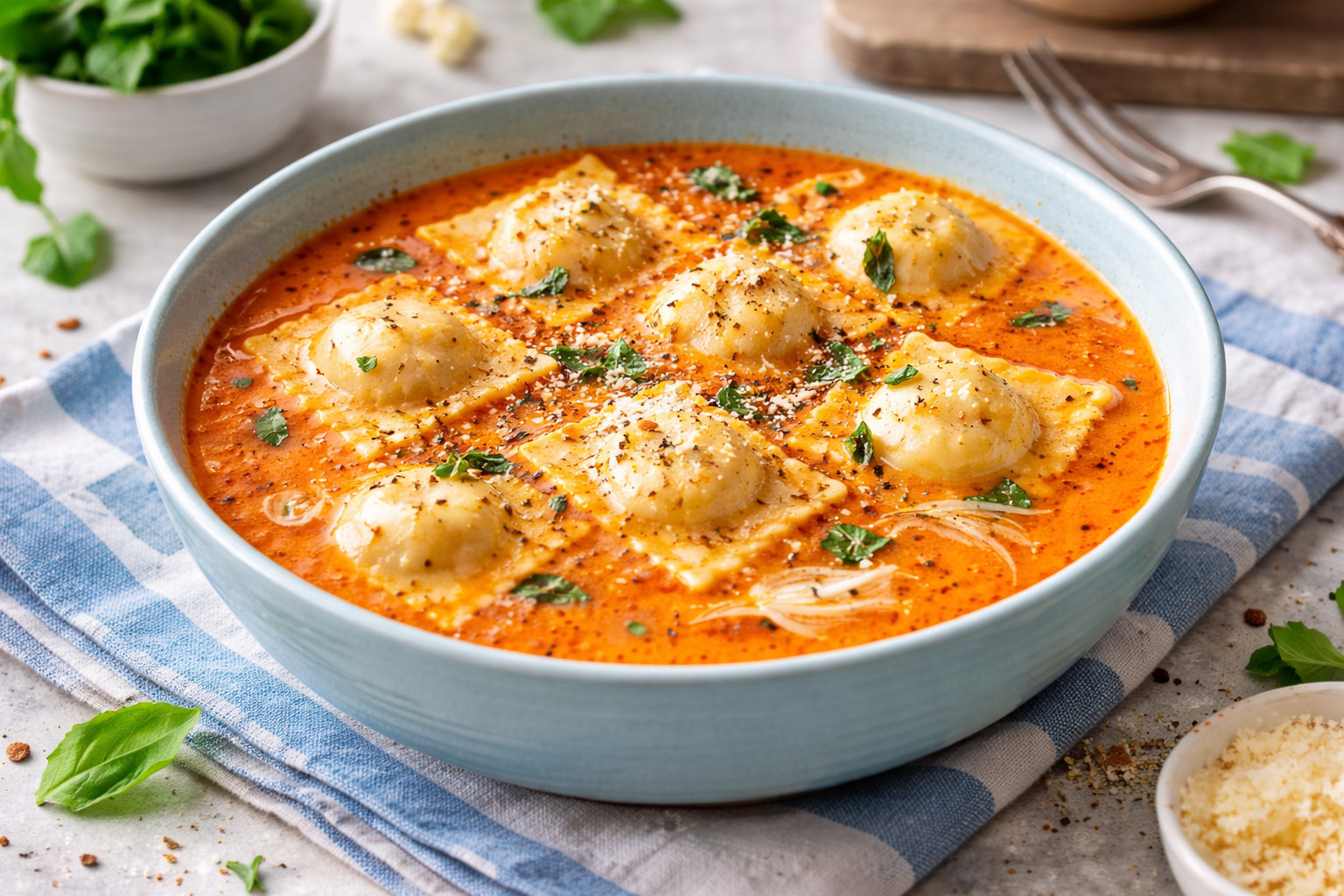
I spent much of my childhood believing ravioli belonged to the realm of tins and pantry shelves—soft squares in a bright red sauce, warmed quickly and served with a sense of quiet occasion. It felt special then, in its own modest way. But it wasn’t until much later, in the rolling stillness of Tuscany, that I encountered ravioli as it was truly meant to be—fresh, delicate, and woven into something far more soulful.
There, I discovered a simpler, more graceful approach: ravioli gently simmered in a fragrant broth, transforming into a dish that feels both rustic and quietly refined. The method is wonderfully intuitive. Rather than treating the ravioli as pasta to be boiled and managed, they are handled like tender parcels—lowered directly into the soup, where they cook softly and rise to the surface when ready, as if by instinct. It is cooking at its most forgiving, yet most rewarding.
What emerges is a bowl of deep comfort, layered with subtle richness. A velvety tomato base, infused with herbs and softened with cream, wraps around each piece of ravioli, creating something that feels both nourishing and indulgent. It carries the warmth of a countryside kitchen, yet holds the polish of a dish you might linger over in a tucked-away trattoria.
And perhaps most beautifully, it asks very little of you. A handful of familiar ingredients, one pot, and a gentle rhythm at the stove. It’s the sort of meal that gathers people in without effort—easy to prepare, generous to serve, and quietly memorable.
A simple soup, yes—but one that feels like a small piece of Tuscany, brought home.
Prepare
Cook
Serving
Ingredients
Choosing Your Ravioli
In a dish such as this, the choice of ravioli becomes part of the story rather than a strict rule. Each variation brings its own quiet character to the bowl, so you may follow instinct as much as tradition.
Cheese-filled ravioli—ricotta or a delicate blend of four cheeses—offer a soft, creamy richness that melts seamlessly into the tomato-laced broth. For something a little more robust, fillings such as beef or sausage lend depth and a gentle heartiness, turning the soup into something altogether more substantial.
As for the form, there is a pleasing flexibility. Fresh ravioli, often found in the chilled section, cook quickly and retain a tender, almost pillowy texture. Frozen varieties are equally welcome—simply allowing a moment or two more in the simmering broth. Even dried ravioli, though more rustic, will yield beautifully with a little extra patience, rewarding you with a soup that feels every bit as comforting.
Thoughtful Substitutions
This is, at its heart, a forgiving dish—one that adapts gracefully to what you have to hand, without losing its sense of elegance.
-
Stock
A light chicken broth creates a balanced, savoury base, though vegetable stock offers a softer, more delicate profile for a vegetarian table. For something deeper, a beef broth brings a richer undertone. Even a well-made bouillon will suffice when simplicity calls. -
Cream
Double cream lends a luxurious finish, but you may soften the richness with half-and-half or whole milk for a lighter result. For a dairy-free approach, coconut milk or a smooth cashew cream introduces a gentle, velvety alternative. -
Pasta Variations
Should ravioli be out of reach, other filled pastas—tortellini or cappelletti—step in effortlessly. Even simple shapes such as penne or rigatoni may be used, creating a more rustic interpretation while maintaining the dish’s comforting spirit. -
Herbs
Fresh thyme offers a subtle earthiness, though dried thyme works beautifully when used sparingly. Alternatively, oregano or a well-balanced Italian herb blend will carry the same warmth through the broth. -
Sweetness
A touch of brown sugar rounds the acidity of the tomatoes, but white sugar, honey, or maple syrup may be used in its place. Each brings a slightly different note—honey and maple lending a softer, more aromatic sweetness. -
Tomatoes
Whole peeled tomatoes provide body and depth, though crushed or diced varieties are equally suitable. For a smoother finish, blending a portion of the soup creates a more refined, velvety texture.
It is, ultimately, a dish that invites ease. A few thoughtful choices, a gentle simmer, and what emerges is something both comforting and quietly elevated—just as it should be.
Method
A Few Gentle Things to Watch For
Even the simplest dishes have their quiet nuances—and here, a little attention makes all the difference.
The ravioli, for instance, should be treated with a light hand. Add them only in the final moments of cooking, allowing just enough time for them to soften and rise. Left too long, they lose their delicate structure, dissolving into the broth rather than sitting within it.
Equally, take care with the cream. A rolling boil will unsettle it, causing the soup to split and lose its velvety finish. Lower the heat, let the surface settle, and then stir it through slowly—preserving that soft, luxurious texture.
If using whole tomatoes, break them gently before they meet the pot. This ensures their sweetness and acidity weave evenly through the broth, rather than arriving in uneven bursts.
And finally, season with restraint at the outset. The broth and ravioli often carry their own salinity, so it is best to taste at the end—adjusting with intention, rather than habit.
What to Serve Alongside
This is a soup that holds its own, yet welcomes a thoughtful accompaniment.
Warm, crusted bread is perhaps the most natural companion—something with structure and chew, such as focaccia or a well-made sourdough, ready to be dipped and torn. It turns the meal into something slower, more tactile.
For contrast, a crisp salad works beautifully. A classic Caesar offers structure and savoury depth, while a bowl of mixed leaves dressed lightly with lemon brings brightness and balance, cutting through the richness of the broth.
If simplicity calls, a few golden slices of garlic bread—or slender breadsticks—are more than enough, quietly soaking up every last trace of the tomato and cream.
Storing & Returning to the Pot
Like many comforting dishes, this soup settles and deepens with time.
-
To Refrigerate
Store in an airtight container for up to four days. The ravioli will gently absorb the broth as it rests, creating a thicker, more concentrated flavour—arguably even more satisfying the next day. -
To Freeze
It may be frozen for up to three months, portioned for ease. Do note that the ravioli will soften further upon thawing, though the flavour remains intact and warming. -
To Reheat
Warm slowly over a gentle heat, allowing the soup to loosen gradually. A small splash of stock or water will restore its original consistency, as the pasta will have drawn in some of the liquid. If using a microwave, heat in intervals, stirring between each, to maintain its smooth texture.
A dish that asks very little, yet gives back generously—quietly improving, even after the first serving.
A Note on Nourishment
For those who like a gentle sense of balance alongside indulgence, here is an approximate guide to the nourishment within this dish—considered across the whole pot, without optional additions:
-
Energy: 1050–1200 kcal
-
Protein: 30–40 g
-
Fat: 36–44 g
-
Carbohydrates: 145–170 g
As ever, these figures are an estimate, shaped by the particular ingredients you choose—the richness of the cream, the filling of the ravioli, the character of your broth.
What matters most, perhaps, is that it offers both comfort and substance in equal measure: a dish that satisfies not only the appetite, but the moment itself.

Print & Share
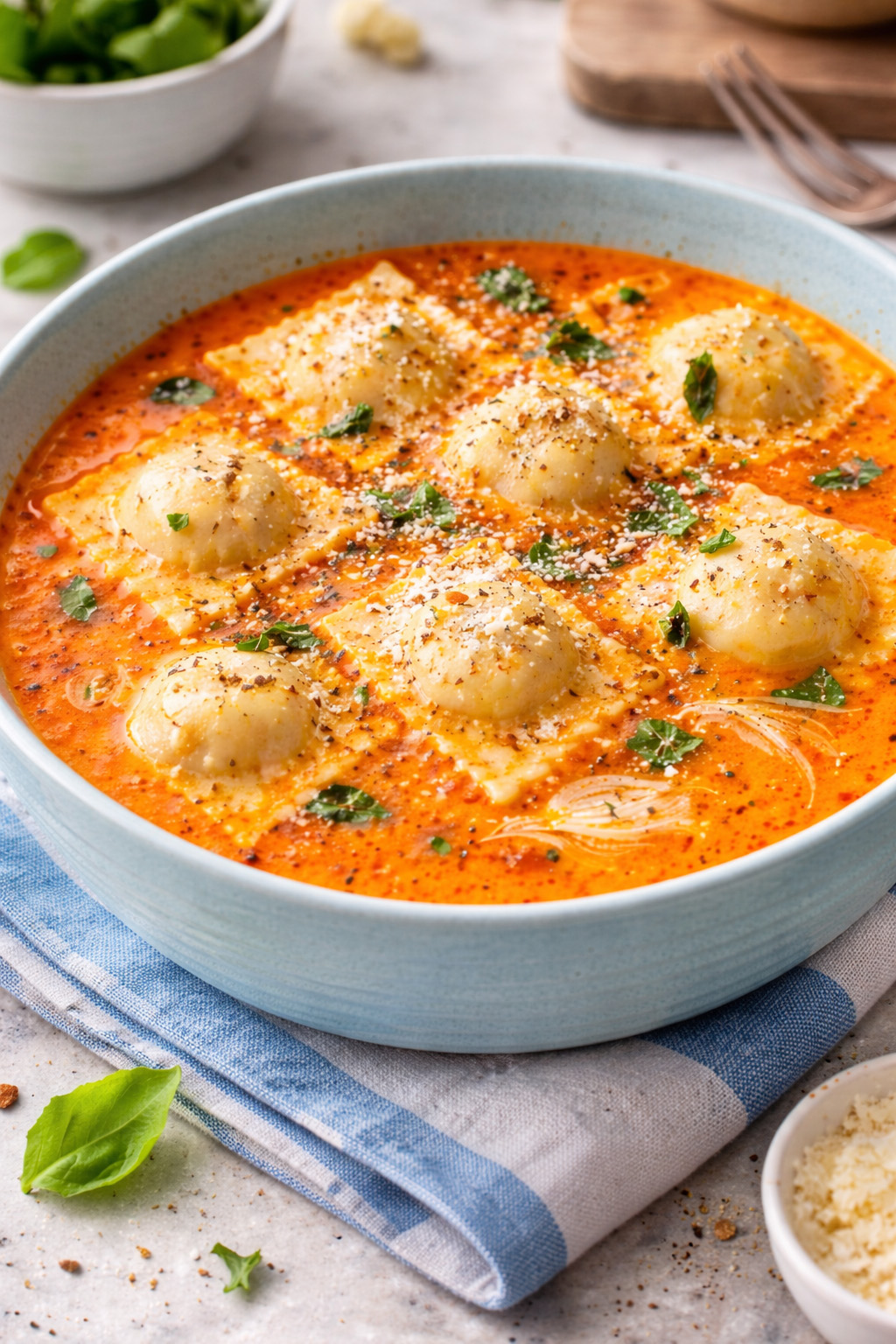

Rustic Tuscan Ravioli Soup
Ingredients
Method
-
Warm a generous drizzle of olive oil with a small knob of butter in a large, heavy-based pot set over a medium heat. As the butter melts and begins to softly foam, add the diced onion, finely chopped celery (leaves included), and minced garlic.
-
Allow the vegetables to cook slowly, stirring now and then, until the onion turns translucent and everything becomes fragrant—about five minutes. This quiet sauté is where the foundation is laid, drawing out a natural sweetness and depth that will carry through the entire dish.
-
Add the whole peeled tomatoes, along with their juices, gently breaking them apart with your spoon as they meet the heat. Stir in the brown sugar, allowing it to dissolve and soften the tomatoes’ natural acidity.
-
Pour in the chicken broth and bring the mixture to a gentle boil. Let it bubble briefly, just enough for the flavours to begin mingling, stirring occasionally as the tomatoes continue to yield and soften.
-
Lower the heat to a calm simmer and introduce the thyme. Let the soup rest here for 15–20 minutes, allowing the herb to release its oils and the broth to deepen in flavour.
-
This is the moment where everything settles—where sharp edges soften and the soup begins to feel whole.
-
Remove and discard the thyme sprig. Using an immersion blender, purée the soup until completely smooth and velvety. If working in batches, take care as you transfer and blend.
-
Return the soup to a low heat and slowly stir in the cream, allowing it to fold in gently. Keep the heat soft—this is what preserves that luxurious, silky finish. Season thoughtfully with salt and freshly cracked black pepper, tasting as you go.
-
Bring the soup to a gentle simmer once more, then add the ravioli. Stir with care and allow them to cook for just a few minutes, until they rise to the surface—plump, tender, and ready.
-
Avoid a rolling boil here; the ravioli are delicate, and a softer touch keeps them intact and beautifully formed.
-
Ladle the soup into warm bowls, ensuring each serving carries both broth and ravioli in balance.
-
Finish with freshly torn basil, scattered just before serving so its aroma lifts with the steam. Serve immediately, while everything is at its most comforting—soft, fragrant, and quietly indulgent.
Discover more from Hartwell Kitchen with Flora Ashbury
Subscribe to get the latest posts sent to your email.