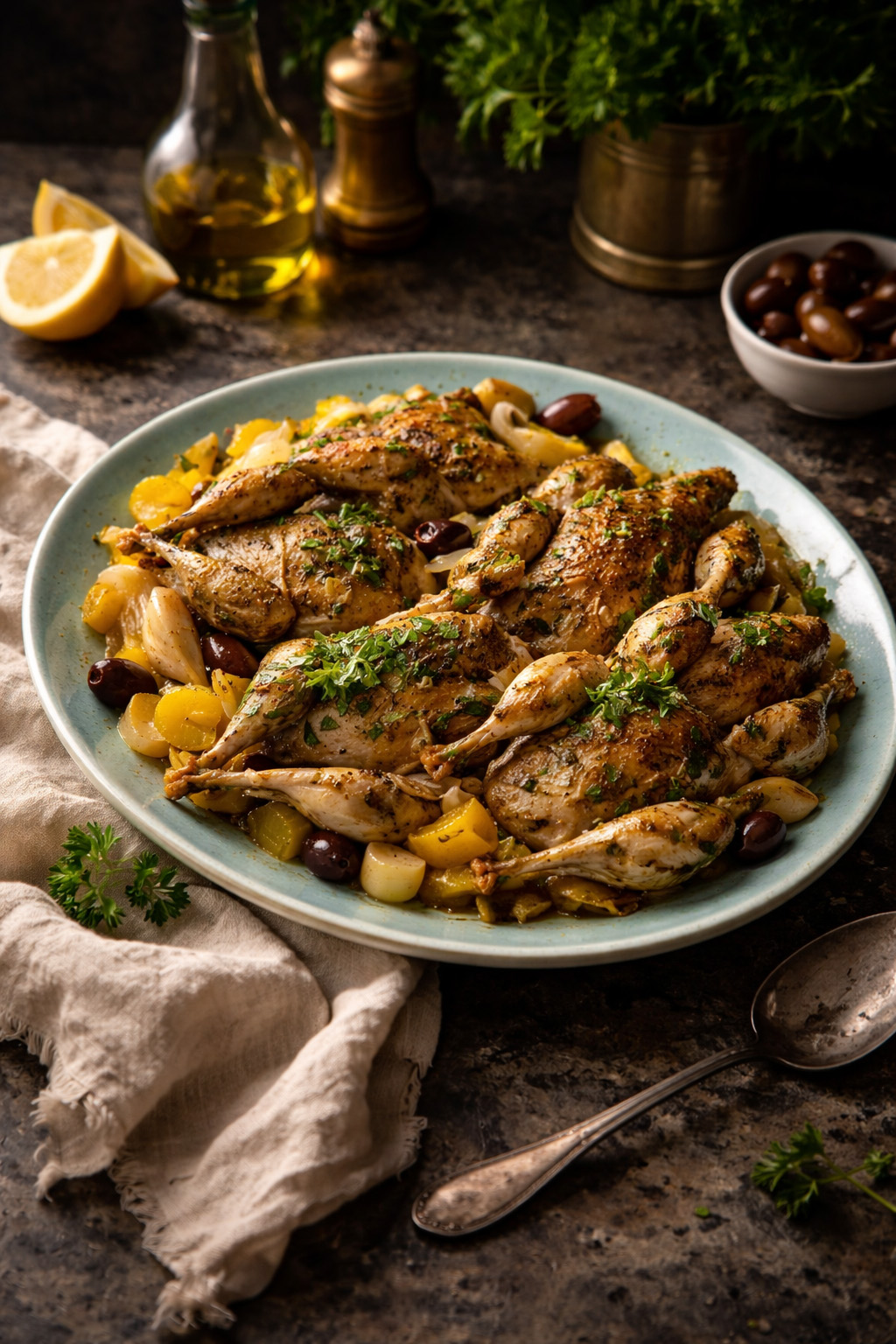

Ingredients
Method
- Begin by preparing the quail. Using kitchen shears or a sharp knife, carefully remove the backbones; for a more refined presentation, the ribs may also be trimmed away. This ensures a more delicate eating experience once braised. Preheat the oven to 160°C.
- In a large, heavy-based casserole or Dutch oven, warm the olive oil over a gentle medium heat. Season the quail generously with fine sea salt, then place them into the pan, allowing them to colour softly on each side. They need not be perfectly browned throughout—just enough to develop a light, golden depth. Set aside once done.
- Into the same pan, add the sliced onion and chopped celery. Sauté slowly until softened and translucent, allowing their sweetness to emerge without taking on colour. Stir in the garlic cloves, followed by the quail and any resting juices, the dried oregano, and the white wine. Let the wine simmer briefly, reducing slightly and releasing its aroma.
- Add just enough water to barely cover the quail, then bring the liquid to a gentle simmer. Season lightly with salt, stir through the lemon zest, and cover with a lid. Transfer to the oven and allow to braise for approximately 1 hour.
- Remove the pot from the oven and fold in the artichoke hearts, olives, and capers, if using. If the quail are not yet tender—particularly in the case of wild birds—return the dish to the oven, covered, for a further 20–30 minutes, until yielding and succulent.
- To finish, stir through the fresh parsley, lemon juice, and a generous grinding of black pepper. Serve warm, accompanied by crusty bread, soft rice, or tender potatoes to capture the fragrant, citrus-laced juices.
Notes
Wild quail may require up to 1½ hours to become fully tender. Larger game birds such as pheasant, grouse, or partridge may take closer to 2 hours. When using these, add the olives and artichokes only once the meat is tender, to preserve their texture and integrity.